

"The experiment has once again highlighted the importance of demand stimulation, which is crucial for the profitability of the off-grid energy business. We have successfully piloted this in Nuwakosunma while also enhancing the social well-being of the community, particularly the women and young girls who have long been impacted by the harmful effects of traditional cooking practices." - Chimaobi Omeye, Ignite Energy Access
Overview:
Challenge: Achieving a higher ARPU earlier in the project allows for higher IRR, which is desirable for every developer. As with most energy access projects, ARPU at this project site was relatively low at the outset of the project.
Solution: Rolled out an experiment in which advanced cookstoves and rice cookers were deployed to the village of Nuwakosunma to help increase early project ARPU.
Result: ARPU increased up to 5x from the initial expectations!
Intro:
MySol Ignite Limited (“Ignite”) is a leading off-grid solar provider in Africa and has already transformed over 20 million lives in 12 countries, with the aim to reach 100 million people by 2030. We share the common goal of empowering communities through energy access. In 2023, Ignite began running their mesh-grid pilot with us, in partnership with CrossBoundary Innovation Lab. This pilot lays the groundwork for Ignite to run scale-up projects to thousands of new households once the DARES program commences in 2024.
Customer’s Challenge
As we’ve highlighted in the past, Average Revenue Per User (ARPU) is a key metric that improves the efficiency of the capex investment and total project profitability. ARPU and ACPU are directly correlated to each other, thus increasing load rapidly at the start of projects is paramount to hitting higher IRRs, and like us, Ignite are committed to the commercial sustainability of their projects in order to bring energy access to as many communities as possible. In order for our customers to prove out the mesh-grid model of electrification and ensure the continuing success of their energy projects, this metric is vital and so we track it closely for each and every customer.
The challenge on this project, like many others, was the question of how to stimulate the required energy utilization to increase ARPU. Although we saw a steady increase in ARPU at the start of the project of over 100%, the figure seemed to have flatlined around that level for a few months. Early efforts were already employed by Ignite to stimulate consumption by contacting low-consumption households to give top-up reminders, but it seemed difficult to move the needle.

Our Solution
Just as the arrival of Netflix and Youtube streaming drastically increased Internet bandwidth needs in the 2010’s, it’s been proven that the way to stimulate energy demand is to have a legitimate use for it.
This has also been verified around the world by studies from reputable companies like Power for all, Crossboundary, MECS and ESMAP , along with many energy developers trialing experiments in demand stimulation and yielding amazing results.
Where we identified to be the most effective and impactful way to intervene was cooking, due to the massive residual health benefits from reducing the amount of smoke inhalation by women and children. However, the way mesh-grids are designed is lean, giving users the amount of power output they need and then modularly scaling them as their demand grows. This is great for optimizing cost, but also means that households generally start with low power availability.
Connections in a mesh-grid can be chosen to have from 150W up to 3.6kW of output and for this design, 600W max output was selected. Many electric cooking appliances however, require more than 1kW.
A mix of small rice cookers (<600W) and advanced cookstoves were chosen.
Advanced cookstoves are stoves that use small pieces of wood or agricultural byproducts as fuel, assisted by a small 15W fan at the bottom powered by electricity. The fan increases the burn temperature and efficiency of the fuel used.
There is research that suggests that this increased burn temperature significantly reduces the amount of smoke produced. Thus we felt that even though this isn’t a complete switch to e-cooking, it’s a first step as an appliance that can be used on a very small system and thus appealing for mass-adoption.
The deployment was evaluated for one month to analyze the performance of the systems and how the appliances improved energy consumption across the board.
For this experiment, we had the following targets:
- Experiment period: Dec 7 2023 to Jan 7 2024.
- 2.7KWh energy usage increase per household (monthly)
- $0.51 increase in ARPU per household (monthly)
By running this experiment we wanted to answer the question: Will people actually adopt these appliances if they have them, and will it ultimately lead to an increase in ARPU?
Project outcome & benefits to Customer
On the 4th of December, 2 Rice Cookers and 3 Advanced Cookstoves were brought to the community, ready to pilot. The initial results were great - not only were the households using the appliances themselves, they were even borrowing them from each other and overall consumption shot through the roof.
Here are the results we saw after the first month:
- 9.56KWh average load increase vs target of 2.7kWh (+254%!)
- $2.61 ARPU increase vs target of $0.51 (+412%!)
- Higher rate of energy top-ups 6 months on from end of experiment
- Over 33% of the households showed interest in purchasing the cookstoves

Note that the usage increase was charged at varying tariffs, leading to a nonlinear revenue increase.
During the month of February we started noticing a downturn, however we were unable to get out to site until March, when the Ignite team did a Community Engagement exercise. This again excited members of the community, and we saw a small spike in consumption again.
However, during the exercise we learned that households had stopped using the appliances for the most part. The main complaint: size.

The pots used for cooking by the community are usually sized to cook for at least 6 - 10 people. As seen in the photo below, the advanced cookstoves aren’t designed to physically support such large cooking pots, even though their heat output is sufficient.
We devised a plan to fabricate a larger tripod, that would allow people to mount large pots over the cookstoves and enable them to cook in a way they were more accustomed to. Unfortunately since March, we had not been able to execute this plan. Furthermore, as the community relies mostly on income from agriculture, the end of the harvest season has further impacted consumption. Both of these factors lead to the decline in consumption observed in the chart above.
One practical challenge came up while the appliances were being tested. The advanced cookstoves were supplied with wood pellets as fuel, and Ignite found these were scarce and difficult to source locally. Rather than let it hold up the pilot, Ignite agreed to substitute ordinary wood, which the stoves handled without issue.
Currently we plan to work with Ignite on a way to get these tripods fabricated and deployed, and we expect that consumption would steadily increase in the next calendar year.
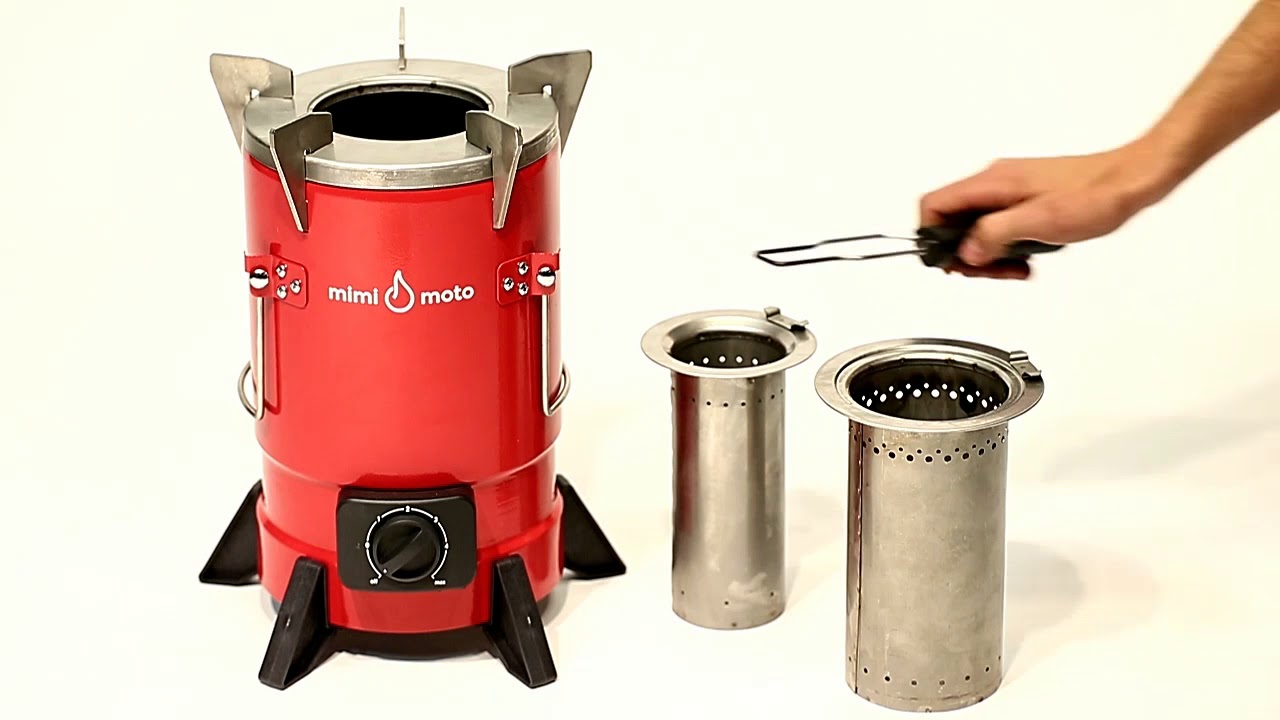
Unfortunately Advanced Cookstoves are still on the expensive side when it comes to appliances. They offer a route to adopting clean cooking for community members with lower power systems, but come at a cost of between $70 - $120 per unit (average of $95).
With a 25% Margin to the developer that then leads to an average sales price to end users of $118.75 or 268.84 Naira per day if financed.

For reference, a rice cooker or pressure cooker can be bought for around $35 - $45 by the developer and then sold to the households at 100 Naira/day under a similar payment plan. In comparison, the price of the Advanced Cookstove at $95 or 268 Naira/day is rather high.
This experiment then leaves Ignite caught at a crossroads: spend more for Advanced Cookstoves that use less power, are less clean, but are compatible with regular systems, or spend more to upgrade to a larger system that is capable of outputting 1.2 or 2.4kW and save money on the rice cooker instead. One thing that’s for sure is that cooking is worth investing in!
Adopting electric cook stoves also has other benefits that haven’t been measured here. It reduces carbon emissions by using solar energy rather than burning wood, it saves time particularly for women due to not collecting firewood and is safer and better for people’s health as the cook stoves don’t produce any smoke. It should also be considered that the collection of firewood for cooking is depleting the community’s natural forest, which could eventually disappear if continued. These are all important factors that Ignite cares about deeply as a sustainable company. These are considerations that are taken into account when determining whether to go for an advanced cookstove, electric cook stove or rice cooker.
Conclusion & Call to Action
From here, Ignite are currently looking at a number of next steps including:
- Introduce continuous customer orientation/learning on the benefits of clean cooking through, interest groups and age grades
- Introduce tripod stands for advanced cookstoves to support large cooking pots
- Introduce more range of appliances like fans, televisions, fridges, freezers
- Drive adoption within the community by selling the product on a LTO (Lease to Own) model with appliance financing
- Set up after sales support for the end users
The underlying lesson in all of the above reiterates the importance of continuous community engagement. There is no such thing as a “one and done” solution when it comes to the complexity of off-grid electrification. Community engagement was the key factor in both the early success and eventual degradation in the experiment results.
This project also showed us that timing matters as much as effort. ARPU held up well for the first 4 months or so, then started to slip. A scheduled check-in at around the 4 month mark would likely have caught the drop-off in appliance use before it showed up in the revenue data. Engagement does not need to be constant, but it does need to be regular.
Ignite have been a strong partner throughout. They took the action to get out to site and run the community engagement exercise once consumption dipped, and adapted the fuel plan on the ground when wood pellets could not be sourced. They are already working through the next steps above to keep the community well served, and that willingness to keep working the problem is what makes a project like this worth running.
With the positive impact on the project’s IRR and the potential health and environmental benefits, it was also promising to see so much demand within the community for a larger rollout. We will continue to work with Ignite to monitor the experiment and take this lesson to improve its future outcomes.
If you’d like to know more about this experiment or generally how a site in your portfolio could benefit from our hands-on approach, contact Sochima@okrasolar.com
“The experiment has once again highlighted the importance of demand stimulation, which is crucial for the profitability of the off-grid energy business. We have successfully piloted this in Nuwakosunma while also enhancing the social well-being of the community, particularly the women and young girls who have long been impacted by the harmful effects of traditional cooking practices.” - Ignite Energy Access


