

Building Reliability Without Breaking the Bank
In 2018 our vision for Mesh Grids was simple: power only DC appliances and avoid the cost and complexity of inverters entirely. The math seemed straightforward: DC appliances might cost more upfront, but we'd save significantly on system hardware.
Reality had other plans. We quickly discovered that people really needed the flexibility to go to their local market and buy whatever was available and affordable, which was almost always AC equipment. By 2021, it became clear that we needed inverters at every connection.
Finding the right inverter was the next challenge. Premium brands like Victron and Meanwell offer excellent reliability, but at price points designed for much wealthier markets. Budget alternatives came with reliability trade-offs that became painfully apparent when our failure rates started climbing in 2023.
That's when we rolled up our sleeves and started re-engineering our approach. After more than a year of testing, tweaking, and occasional head-scratching, we've developed inverters that we believe are uniquely suited for off-grid communities in our power range. Here's how we got there.
The Problem with Fast vs. Slow Protection
One of our biggest breakthroughs came from understanding that inverter protection isn't just about having it - it's about having it at the right speed. Most people know that inverters shut down when they detect too much current, but what's less obvious is that you actually need multiple layers of protection working at different speeds.
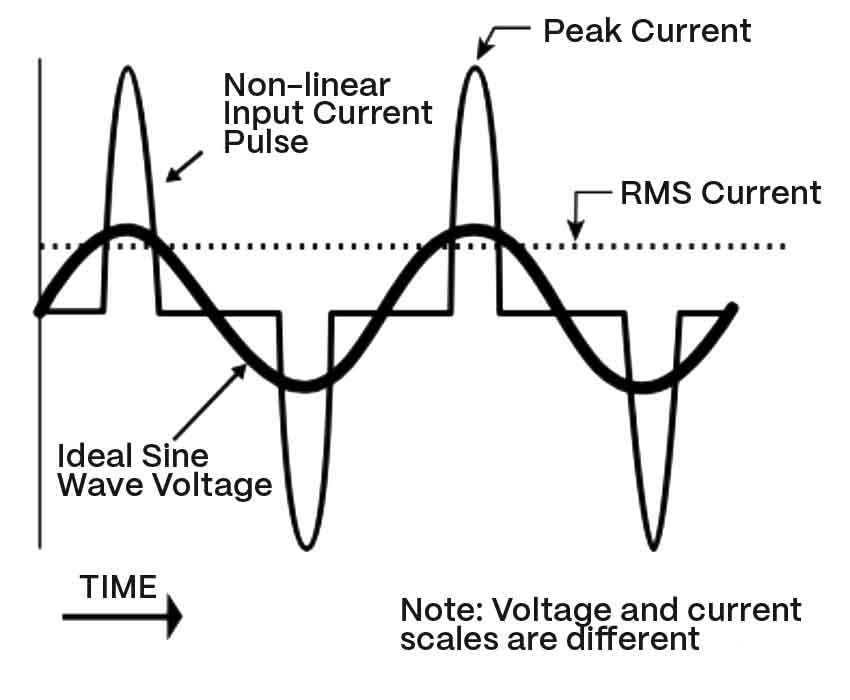
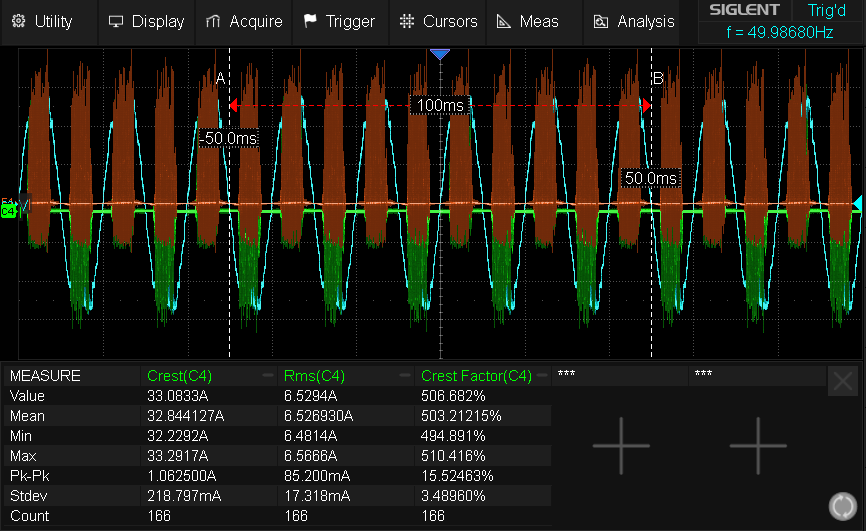
In inverters, you need slow-acting RMS protection that kicks in after several seconds for sustained overloads, and lightning-fast peak protection that responds within microseconds to dangerous spikes. The challenge is that real-world electrical loads aren't the clean, smooth sine waves that inverters are designed to produce. When someone plugs in their phone charger, laptop, or LED lights - all of which use switched-mode power supplies—they create what engineers call "non-linear loads." These loads are spiky, with peak currents that can be more than three times higher than their average draw, compared to just 1.4 times higher for a perfect sine wave.
Here's where it gets tricky: clamp down too aggressively on these spikes, and suddenly half the appliances your customers want to use won't work. Too lenient, and those spikes will destroy the main internal components, the power transistors, before you know what hit you.
We found the sweet spot by redesigning our peak detection circuit to be both faster and smarter. Our current design handles an 800W angle grinder connected to an 800W inverter without breaking a sweat. More importantly, when someone inevitably connects a 3kW mill to that same inverter, the protection kicks in fast enough to save the valuable hardware (and valuable uptime), while distinguishing between legitimate high-crest loads and actual fault conditions.
Battling the Elements (and the Occasional Gecko)
Our first encounters with Ingress Protection failures were not with dust, nor with water, but funnily (and tragically) enough, with geckos. In Cambodia, small geckos seemed to find our inverter enclosures to be excellent hiding spots, but they caused internal short circuits which fried the components (and, sadly, the geckos too).
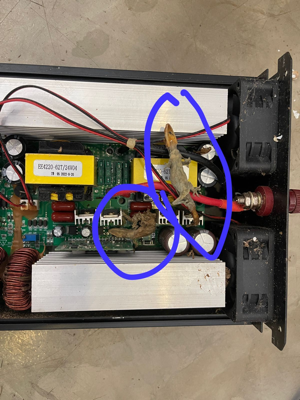
In Nigeria, geckos were not an issue, but dust was. Even indoor installations can accumulate serious buildup within months. In some cases this would also fry components: not due to overheating, but dust and moisture combining to create conductive bridges between circuit board pins.
.png)
Our solution was conformal coating: essentially an invisible insulation layer that covers the important sections of the circuit board, often used in aerospace and other demanding applications.
.png)
We also tackled the less glamorous but equally important issue of connector reliability. The combination of vibration from transport over rough roads and thermal cycling from daily use was causing internal connections to loosen over time. Better gluing solved this problem, but it was a reminder that reliability isn't just about the complex components - sometimes it's about getting the basics right.
.png)
One Size Doesn't Fit All
Perhaps our biggest strategic shift was abandoning our "one-size-fits-all" approach. We'd been trying to keep our product line simple with just a few models, but the data was telling us a different story.
The real eye-opener came when we analyzed our failure patterns and realized that phone charging businesses were experiencing dramatically higher failure rates. These businesses, common in markets and central areas, might run 100+ phone chargers simultaneously. Each charger only draws 5-20W, which sounds manageable, but remember those non-linear loads we talked about? A hundred phone chargers create an electrical environment that's particularly challenging for standard inverters, with extremely high harmonic content and unpredictable current spikes from all those switching power supplies operating independently. We realised that ultimately this kind of user needed a different inverter altogether.

This insight led us to develop two distinct Hub categories: the L45 for "light" productive use (think residential with above-average needs, like running a freezer), and the L90 for "heavy" productive applications. The L90 comes with a 1.2kW inverter built with premium components: higher-current power semiconductors and enhanced filtering to handle the challenging power quality conditions. It also includes Bluetooth connectivity for monitoring and fine-tuned control on the parameters.
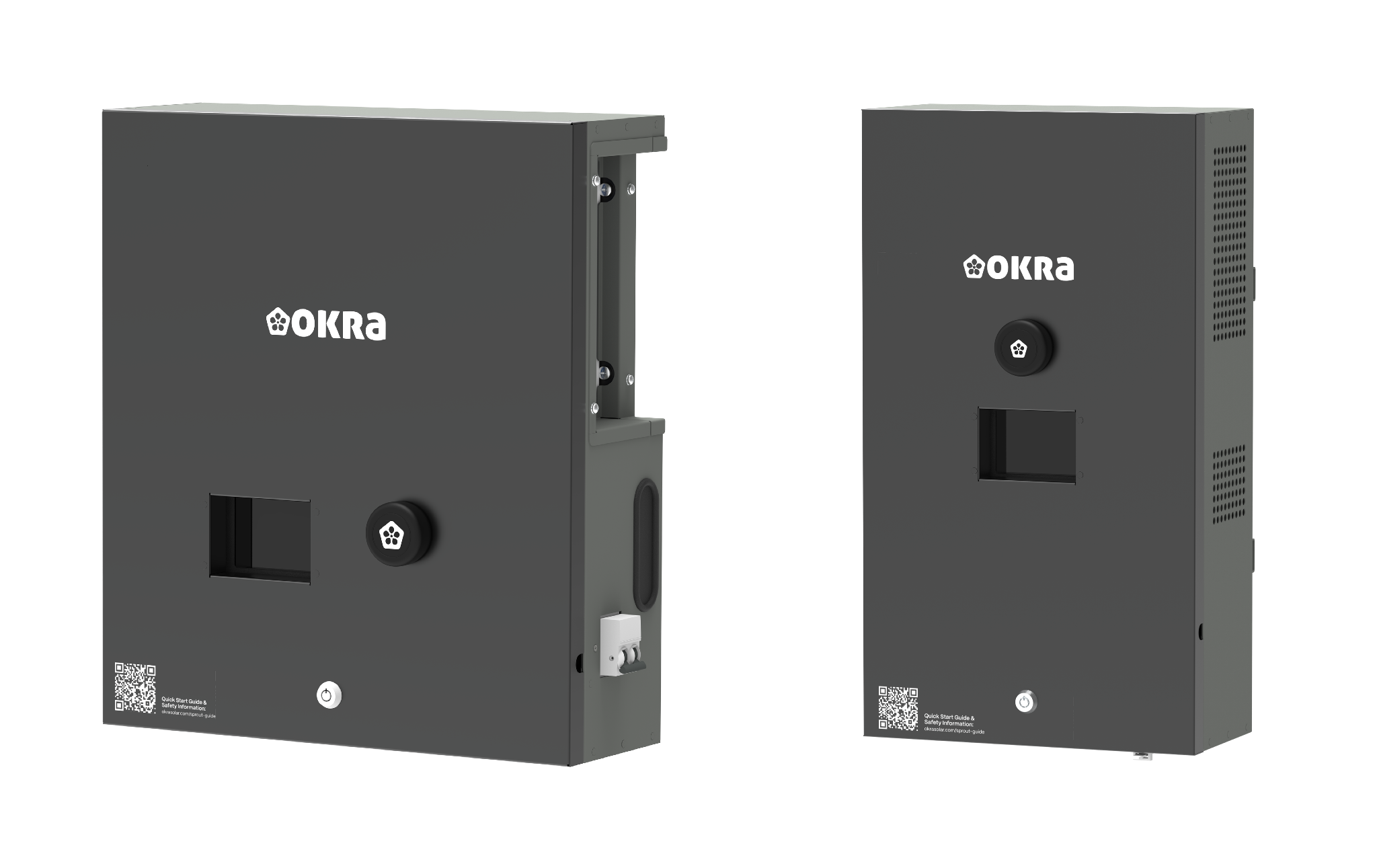
While the L90 Kit does cost more, it's engineered for the punishment that productive commercial applications dish out. We literally haven't been able to break the L90 in field testing yet, which gives us confidence for our partners deploying equipment in remote locations where sending in items for servicing is costly in money and downtime.
Preparing for Bigger Storms
Lightning protection might seem like an edge case, but when you're deploying many thousands of units, even small percentages add up. Our anecdotal reports combined with risk assessments using tools from IEC62305 (check out our Lightning Risk Calculator tool we built!) suggest that about 0.2% of our inverters are being destroyed by lightning strikes each year, not catastrophic, but definitely worth addressing.
We've now built surge protection directly into our hubs using Gas Discharge Tubes (GDTs), which can handle the high surge currents that lightning events create. Our Kits from 2026 onwards will also include additional earthing and bonding equipment to ensure these protection systems have a solid ground connection to work effectively.
Combined with our grid-level lightning protection, this creates multiple layers of protection against surge events. We're taking a proactive approach to a problem that climate data suggests will only get worse as storm intensity increases globally.
Getting the Details Right
Finally, we learned that in inverters, timing really is everything. All those switches and controls need to operate with microsecond precision, which means the control integrated circuits and gate drivers are absolutely critical components.
We found that with cheaper inverters, many suppliers use clone chips that look identical to genuine parts from established manufacturers like Texas Instruments or Onsemi, but don't perform the same way. The performance differences aren't always obvious until you're dealing with challenging real-world conditions: things like temperature extremes, supply voltage variations, or high crest factor loads can reveal timing differences, protection threshold variations, or oscillator stability issues that don't show up in basic testing.
We now specify and verify that our control ICs are genuine parts from trusted manufacturers. This includes sourcing from authorized distributors and implementing component authentication in our final inspection process. The cost increase is typically minimal, but the improvement in field reliability is substantial.
Looking Forward
We're still early in deploying these improved inverters, but the initial results are encouraging. We haven't seen any of the failure modes that plagued our earlier generations, and more importantly, we're hearing positive feedback from the field about system reliability and performance.
Building technology for off-grid communities means constantly balancing performance with affordability. It's taken us several years to find the right formula, but we're confident we now have an inverter solution that's truly designed for the realities of mesh-grid deployment in challenging environments.
The journey isn't over - it never really is in this field - but we're excited about where these improvements are taking us, our partners and the communities we serve.


