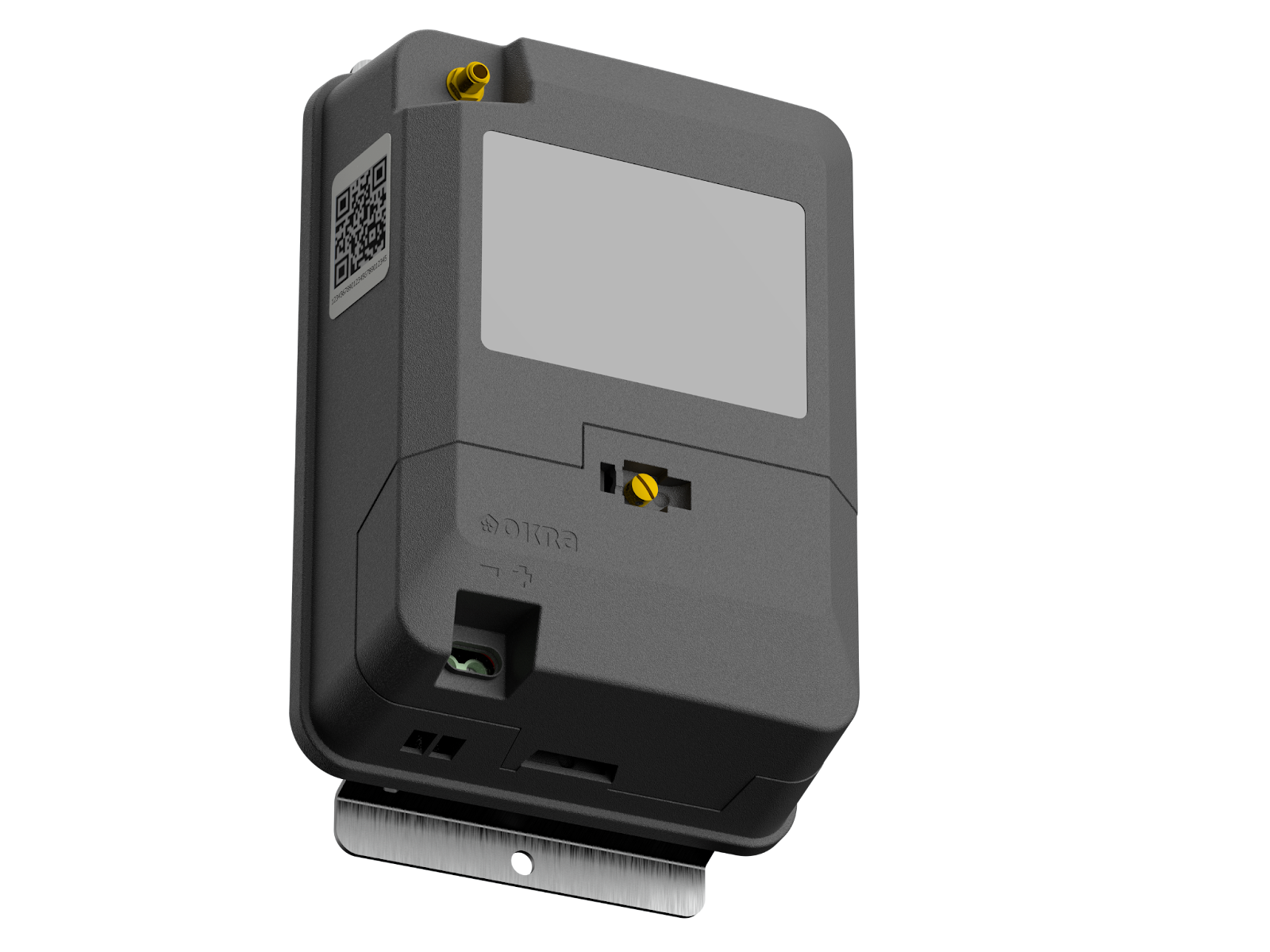
A Journey to Right-Sizing Mesh-Grid Hardware for Scale
Introduction
In 2023, we began rolling out Hub & Spoke mesh-grid installations to dramatically reduce costs per connection. But the Spoke economics still struggled. Spokes consume small amounts of energy and generate small amounts of revenue, while also making up around 80% of connections in a typical project. Our main mesh-grid meter installed at every house, the Pod - designed for solar charging, high power output, battery management, and power sharing - delivered far more capability than required for these low-consumption homes. With downward cost pressure from the market and competitors entering the space, we needed to rethink the Spoke’s financial viability.
A Quick Refresher on Hub & Spoke
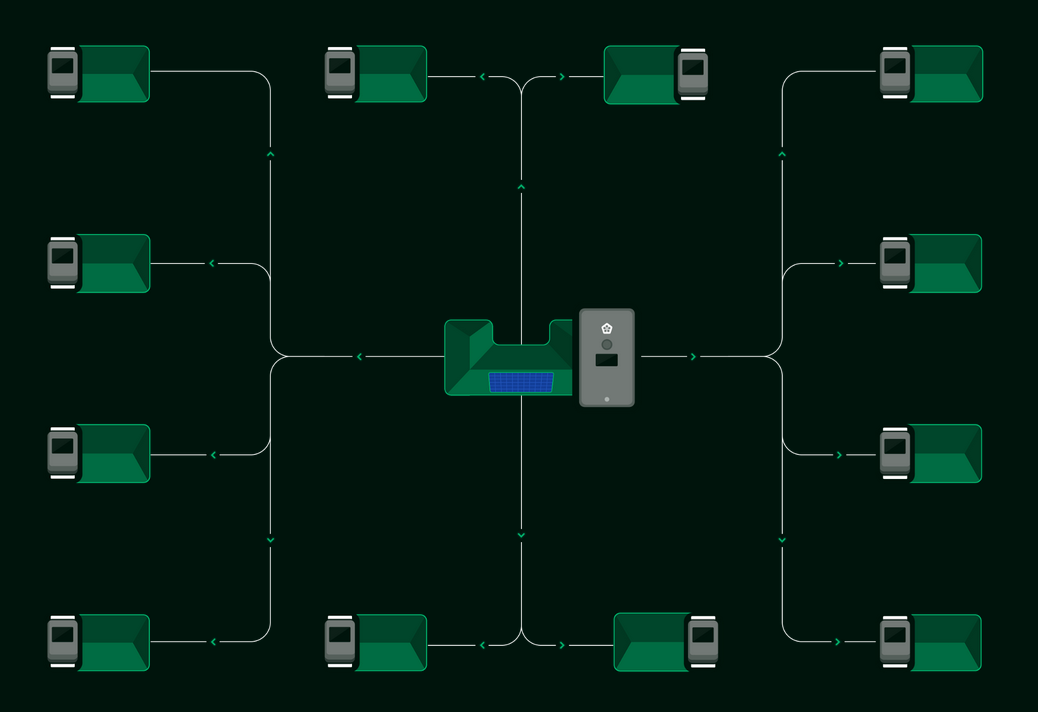
We've covered the Hub & Spoke model and its advantages for off-grid electrification before, but here's a quick refresher. Hubs are high-consumption businesses or households equipped with solar and battery, powering productive appliances like freezers, mills, and power tools. They can draw up to 1.2kW of AC power (or 2.4kW for high-powered Hubs). Spokes are low-consumption homes located nearby, drawing excess power from Hubs for basic needs: such as lights, fans, phone charging, and TV. Each Spoke can draw up to 150W of AC power.
In most villages, Spokes are the majority of households. We design typical mesh-grid projects with a 1:4 Hub to Spoke ratio, meaning for every Hub there are four Spokes connected. By connecting systems like this, we can share the necessary power to Spokes without adding batteries or panels to every house, dramatically lowering the average cost per connection while ensuring each user has sufficient, high-quality service for their needs.
The Early Tradeoffs
One of the most contested decisions early on was where to meter energy consumption: at the Hub, or at each Spoke? This would have a big effect on what kind of device we would design. Metering at the Hub seemed attractive initially - a single multichannel meter could track consumption for all connected Spokes and save cost. But there were also risks and complexities in making this change. Given we'd also still need an inverter at every Spoke household since power is distributed in DC, the simplest and lower risk option, a stripped-down Pod, won out.
After this high-level decision was locked in, came all the detailed requirements decisions. Which came with countless discussions around trade-offs between cost and development speed. Leaf needed to hit major cost saving targets, but nothing is black and white. Saving $3 but spending another 6 months to achieve it might not be worth it, right now. Feature by feature, component by component, we looked at the Pod and started imaging what Leaf would become.
Engineering Requirements
With the architecture settled, we turned to the Leaf hardware. Based on our historical data and knowledge of the typical power needs of 80% of rural households, we decided that it needed to provide 150W of AC output to Spoke households. As Leaf would be fed by a Hub’s battery, it had to provide 24V DC to an inverter for this output.
The device would use OkraNet (via Wi-SUN protocol) as its primary method of cloud communication, so we moved the Wi-SUN antenna to inside the enclosure as it was a vulnerability point for billing tampering. We then hired an RF specialist to ensure signal quality wouldn't suffer from being housed internally. The team kept the original external 2G antenna as backup, with the plan to phase 2G support out entirely in the following year.
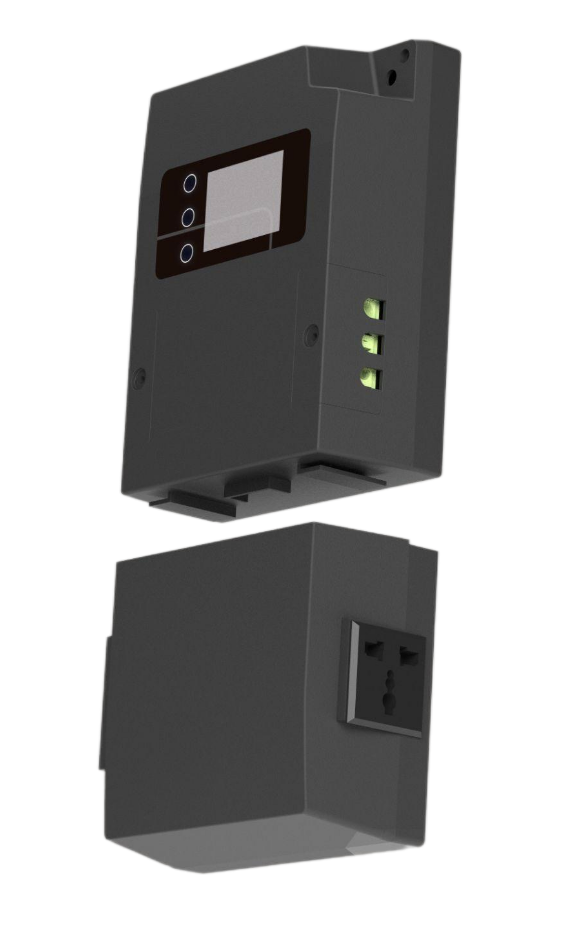
To achieve the highest cost reduction possible, every dollar and cent was scrutinised. The screen and buttons that households and installers enjoy on the Pod cost about $2, but the value of its UX is hard to quantify. In the end, UX consistency won the debate: Spoke households would see the same interface as Hub households, with the same billing display, as well as monitoring and installation experience.
After that, everything non-essential for a Spoke was removed from the Pod design to create Leaf. Charge control was cut - Leaf draws from the Hub's battery, so there's no need for solar MPPT or charge algorithms. Full grid control was cut - the Pod's 50V power-sharing capability isn't needed when you're only receiving power, not generating or sharing it. USB ports were cut - the inverter included in the Spoke Kit already provides them.
The result: a streamlined device focused on one job: metering and controlling power delivery reliably to a Spoke household for a dramatically lower cost.
Logistics Woes
Hardware development is one thing; getting physical units into the field is another. We 3D printed early enclosures in Portugal to validate the internal antenna design, but when we shipped the Leaf PCBs from China they were stuck in customs for months, stalling our ability to test. When we finally got them out and shipped units to Nigeria for our first trial, they were stuck in customs again. At one point, a team member resorted to seven Leaf prototypes in a suitcase on a flight to Nigeria to speed things up. That suitcase went completely missing on the flight. These are the challenges that don't appear on our product pages, but they're very real when building hardware for emerging markets with a team spread across multiple continents.
First Trial: Abuja, Early 2025
After these woes, our first real-world Leaf trial took place in our Abuja office, powering about a dozen fans to test performance under sustained AC load. By this point, we had fairly high confidence in the electronics, which had been running on staging/stress testing setups for months. The main design unknowns were related to the enclosure and physical UX.
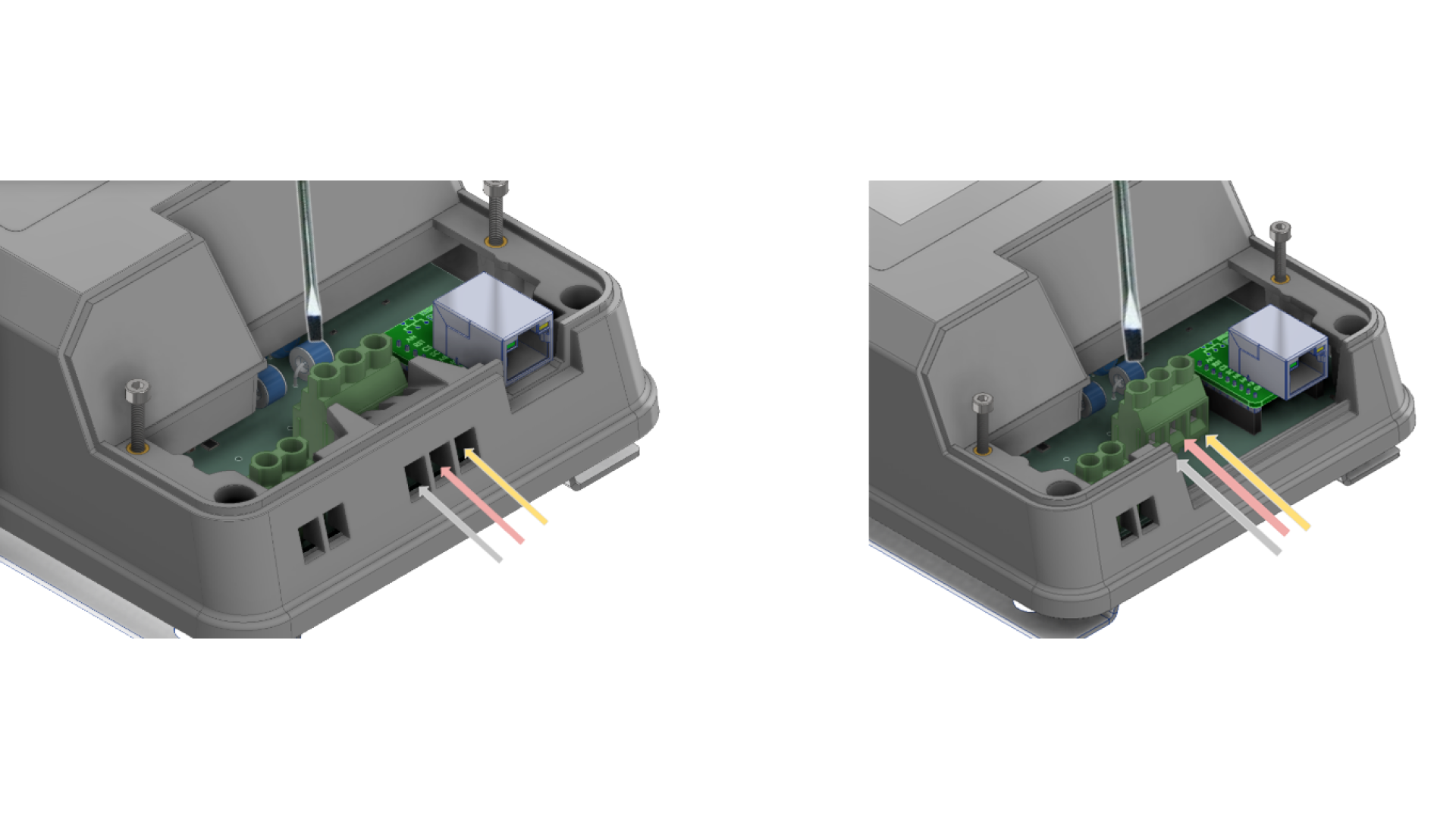
We had printed two different versions of a Leaf enclosure design, to test multiple options for the power-input terminals positioning. The Nigeria team quickly highlighted that one version was more difficult to wire and posed a risk of burning/melting if installed incorrectly, so the other design was chosen and we finalized the mechanical design. No amount of lab testing can replace the feedback of taking a prototype to the field and getting it in the hands of installers and customers.

Notably, the trials reinforced our confidence in the electronics design. We haven’t made any major electronics changes since the first product version, a good sign that we’ve successfully carried over the Pod’s reliability.
Where We Are Now - and What’s Next
Leaf started as a simple question: How can Spoke households become affordable to energize? In the end our team achieved a 40% cost reduction for Spokes, without sacrificing reliability or connectivity. For a device that makes up the majority of connections in every project, this fundamentally changes the economics of energy access. Leaf is now deployed in Nigeria and Haiti, with around 9000 more units ready to ship. In 2026, we're gearing up to install over 20,000 households across Nigeria and Haiti.
As we learn from Leafs in the field, we continue to look for ways to cost-optimize and deliver the most affordable solution. Leaf fundamentally makes it possible to electrify the entire community, not just productive users, and we can’t wait to see them in action at scale!